
Invasion: Aerial Warfare
Description
Invasion: Aerial Warfare: Build Your Army and Fight for Global Supremacy
At its heart, Invasion: Aerial Warfare is about turning a vulnerable military base into a force capable of competing on a global scale.
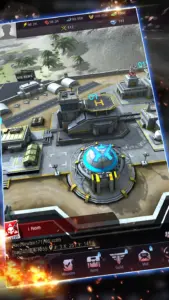
Your headquarters serves as the starting point for your campaign. From there, you can develop facilities, improve your military capabilities, gather intelligence, expand across the map, and prepare forces for conflicts against other players.
The game also has a strong social component. Alliances allow players to cooperate rather than fight entirely on their own, creating opportunities for coordinated campaigns and large-scale guild warfare.
This combination makes the experience broader than a conventional base-building game. You are simultaneously managing an economy, developing a military, watching the world map, and considering the actions of other commanders.
Build and Develop Your Military Base
Your Headquarters Is the Foundation of Your Power
A successful campaign begins with a strong base.
Your headquarters provides the infrastructure needed to develop your military organization. Different facilities can support different aspects of progression, from resource management to military development.
As your settlement grows, upgrading its facilities becomes increasingly important. Improvements can increase efficiency and give you the capacity needed to support a larger and more advanced force.
The key is to think about your base as an interconnected system.
One upgrade can create new opportunities, while another can improve your ability to maintain your military. Managing these investments carefully can help you build a foundation capable of supporting long-term expansion.
Recruit and Strengthen Your Army
Turn Resources Into Military Power
No commander can conquer territory without an army.
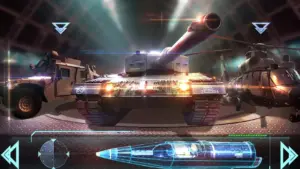
Recruiting and developing troops is therefore one of the central parts of progression in Invasion: Aerial Warfare. Your military provides the means to defend your own territory while giving you the ability to challenge opposing bases.
Building an effective army requires planning. Military strength is not simply about producing units continuously; you also need to maintain the infrastructure and resources that allow your forces to operate effectively.
The larger your ambitions become, the more important this balance becomes.
Fight for Control of the World Map
Territory Is a Strategic Resource
The world map is where the game’s larger conflict unfolds.
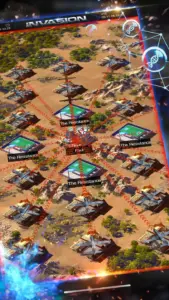
The official feature list emphasizes fighting for land and expanding guild territory, while also providing a real-time panoramic view of the battlefield.
This means your surroundings matter.
Nearby territories can represent opportunities for expansion, potential threats, or strategically important locations. As different alliances compete for influence, the map can continually change.
A commander who pays attention to the larger battlefield can make better decisions than someone who focuses exclusively on their own base.
Master Warfare Technology
Intelligence Can Change the Battlefield
Military technology plays an important role in the game’s progression.
The official listing highlights upgrades to warfare tactics and advanced technology as tools for gathering intelligence.
This creates another layer of strategic development beyond simply recruiting more troops.
Information can help you understand the battlefield before making major decisions. The more effectively you use your available intelligence, the easier it becomes to identify opportunities and avoid unnecessary risks.
Technology therefore becomes part of your commander’s toolkit.
Images
Download links
How to install Invasion: Aerial Warfare APK?
1.Open the downloaded APK file
Locate the Invasion: Aerial Warfare APK in your device’s Downloads folder or notification panel and tap it.
2.Tap “Install”
Select the Install option when the installation screen appears.
3.Follow the on-screen instructions
Wait for the installation to finish, then follow any remaining prompts to complete the setup.
Related apps








EXCLUSIVE GAMES
Most viewed Games
Best Rated Games


